Sunday, May 12, 2013
Morphology of Flowers
Morphology
A stereotypical flower consists of four kinds of structures attached to the tip of a short stalk. Each of these kinds of parts is arranged in a whorl on the receptacle. The four main whorls (starting from the base of the flower or lowest node and working upwards) are as follows:
Calyx: the outermost whorl consisting of units called sepals; these are typically green and enclose the rest of the flower in the bud stage, however, they can be absent or prominent and petal-like in some species.
Corolla: the next whorl toward the apex, composed of units called petals, which are typically thin, soft and colored to attract animals that help the process of pollination.
Androecium (from Greek andros oikia: man's house): the next whorl (sometimes multiplied into several whorls), consisting of units called stamens. Stamens consist of two parts: a stalk called a filament, topped by an anther where pollen is produced by meiosis and eventually dispersed.
Gynoecium (from Greek gynaikos oikia: woman's house): the innermost whorl of a flower, consisting of one or more units called carpels. The carpel or multiple fused carpels form a hollow structure called an ovary, which produces ovules internally. Ovules are megasporangia and they in turn produce megaspores by meiosis which develop into female gametophytes. These give rise to egg cells. The gynoecium of a flower is also described using an alternative terminology wherein the structure one sees in the innermost whorl (consisting of an ovary, style and stigma) is called a pistil. A pistil may consist of a single carpel or a number of carpels fused together. The sticky tip of the pistil, the stigma, is the receptor of pollen. The supportive stalk, the style, becomes the pathway for pollen tubes to grow from pollen grains adhering to the stigma.
Although the arrangement described above is considered "typical", plant species show a wide variation in floral structure. These modifications have significance in the evolution of flowering plants and are used extensively by botanists to establish relationships among plant species.
Christmas Lily (Lilium longiflorum).
1. Stigma
2. Style
3. Stamens
4. Filament
5. Petal
The four main parts of a flower are generally defined by their positions on the receptacle and not by their function. Many flowers lack some parts or parts may be modified into other functions and/or look like what is typically another part. In some families, like Ranunculaceae, the petals are greatly reduced and in many species the sepals are colorful and petal-like. Other flowers have modified stamens that are petal-like, the double flowers of Peonies and Roses are mostly petaloid stamens. Flowers show great variation and plant scientists describe this variation in a systematic way to identify and distinguish species.
Specific terminology is used to describe flowers and their parts. Many flower parts are fused together; fused parts originating from the same whorl are connate, while fused parts originating from different whorls are adnate, parts that are not fused are free. When petals are fused into a tube or ring that falls away as a single unit, they are sympetalous (also called gamopetalous.) Connate petals may have distinctive regions: the cylindrical base is the tube, the expanding region is the throat and the flaring outer region is the limb. A sympetalous flower, with bilateral symmetry with an upper and lower lip, is bilabiate. Flowers with connate petals or sepals may have various shaped corolla or calyx including: campanulate, funnelform, tubular, urceolate, salverform or rotate.
Many flowers have a symmetry. When the perianth is bisected through the central axis from any point, symmetrical halves are produced, forming a radial symmetry. These flowers are also known to be actinomorphic or regular, e.g. rose or trillium. When flowers are bisected and produce only one line that produces symmetrical halves the flower is said to be irregular or zygomorphic, e.g. snapdragon or most orchids.
Flowers may be directly attached to the plant at their base (sessile—the supporting stalk or stem is highly reduced or absent). The stem or stalk subtending a flower is called a peduncle. If a peduncle supports more than one flower, the stems connecting each flower to the main axis are called pedicels. The apex of a flowering stem forms a terminal swelling which is called the torus or receptacle.
Floral formula

A stereotypical flower consists of four kinds of structures attached to the tip of a short stalk. Each of these kinds of parts is arranged in a whorl on the receptacle. The four main whorls (starting from the base of the flower or lowest node and working upwards) are as follows:
Calyx: the outermost whorl consisting of units called sepals; these are typically green and enclose the rest of the flower in the bud stage, however, they can be absent or prominent and petal-like in some species.
Corolla: the next whorl toward the apex, composed of units called petals, which are typically thin, soft and colored to attract animals that help the process of pollination.
Androecium (from Greek andros oikia: man's house): the next whorl (sometimes multiplied into several whorls), consisting of units called stamens. Stamens consist of two parts: a stalk called a filament, topped by an anther where pollen is produced by meiosis and eventually dispersed.
Gynoecium (from Greek gynaikos oikia: woman's house): the innermost whorl of a flower, consisting of one or more units called carpels. The carpel or multiple fused carpels form a hollow structure called an ovary, which produces ovules internally. Ovules are megasporangia and they in turn produce megaspores by meiosis which develop into female gametophytes. These give rise to egg cells. The gynoecium of a flower is also described using an alternative terminology wherein the structure one sees in the innermost whorl (consisting of an ovary, style and stigma) is called a pistil. A pistil may consist of a single carpel or a number of carpels fused together. The sticky tip of the pistil, the stigma, is the receptor of pollen. The supportive stalk, the style, becomes the pathway for pollen tubes to grow from pollen grains adhering to the stigma.
Although the arrangement described above is considered "typical", plant species show a wide variation in floral structure. These modifications have significance in the evolution of flowering plants and are used extensively by botanists to establish relationships among plant species.
Christmas Lily (Lilium longiflorum).
1. Stigma
2. Style
3. Stamens
4. Filament
5. Petal
The four main parts of a flower are generally defined by their positions on the receptacle and not by their function. Many flowers lack some parts or parts may be modified into other functions and/or look like what is typically another part. In some families, like Ranunculaceae, the petals are greatly reduced and in many species the sepals are colorful and petal-like. Other flowers have modified stamens that are petal-like, the double flowers of Peonies and Roses are mostly petaloid stamens. Flowers show great variation and plant scientists describe this variation in a systematic way to identify and distinguish species.
Specific terminology is used to describe flowers and their parts. Many flower parts are fused together; fused parts originating from the same whorl are connate, while fused parts originating from different whorls are adnate, parts that are not fused are free. When petals are fused into a tube or ring that falls away as a single unit, they are sympetalous (also called gamopetalous.) Connate petals may have distinctive regions: the cylindrical base is the tube, the expanding region is the throat and the flaring outer region is the limb. A sympetalous flower, with bilateral symmetry with an upper and lower lip, is bilabiate. Flowers with connate petals or sepals may have various shaped corolla or calyx including: campanulate, funnelform, tubular, urceolate, salverform or rotate.
Many flowers have a symmetry. When the perianth is bisected through the central axis from any point, symmetrical halves are produced, forming a radial symmetry. These flowers are also known to be actinomorphic or regular, e.g. rose or trillium. When flowers are bisected and produce only one line that produces symmetrical halves the flower is said to be irregular or zygomorphic, e.g. snapdragon or most orchids.
Flowers may be directly attached to the plant at their base (sessile—the supporting stalk or stem is highly reduced or absent). The stem or stalk subtending a flower is called a peduncle. If a peduncle supports more than one flower, the stems connecting each flower to the main axis are called pedicels. The apex of a flowering stem forms a terminal swelling which is called the torus or receptacle.
Floral formula
Dianthus (Carnation)
Dianthus (Carnation) 
Kingdom: Plantae
(unranked): Angiosperms
(unranked): Eudicots
(unranked): Core eudicots
Order: Caryophyllales
Family: Caryophyllaceae
Genus: Dianthus
Dianthus is a genus of about 300 species of flowering plants in the family Caryophyllaceae, native mainly to Europe and Asia, with a few species extending south to north Africa, and one species (D. repens) in arctic North America. Common names include carnation (D. caryophyllus), pink (D. plumarius and related species) and sweet william (D. barbatus).
Species
Dianthus alpinus - Alpine PinDianthus amurensis AmurPink
Dianthus anatolicus
Dianthus arenarius - Sand Pink
Dianthus armeria - Deptford Pink
Dianthus balbisii
Dianthus barbatus - Sweet William
Dianthus biflorus
Dianthus brevicaulis
Dianthus burgasensis
Dianthus callizonus
Dianthus campestris
Dianthus capitatus
Dianthus carthusianorum - Carthusian Pink
Dianthus caryophyllus - Carnation or Clove Pink
Dianthus chinensis - China Pink
Dianthus cruentus
Dianthus deltoides - Maiden Pink
Dianthus erinaceus
Dianthus freynii
Dianthus fruticosus
Dianthus furcatus
Dianthus gallicus - French Pink or Jersey Pink
Dianthus giganteus
Dianthus glacialis
Dianthus gracilis
Dianthus graniticus

Dianthus gratianopolitanus - Cheddar Pink
Dianthus haematocalyx
Dianthus japonicus
Dianthus kladovanus
Dianthus knappii
Dianthus lusitanus
Dianthus microlepsis
Dianthus moesiacus
Dianthus monspessulanus - Fringed pink
Dianthus myrtinervius - Albanian Pink
Dianthus nardiformis
Dianthus nitidus
Dianthus pavonius
Dianthus petraeus
Dianthus pinifolius
Dianthus plumarius - Garden Pinks, Wild pink
Dianthus pungens
Dianthus repens - Boreal Carnation
Dianthus scardicus
Dianthus seguieri - Sequier's Pink
Dianthus simulans
Dianthus spiculifolius
Dianthus squarrosus
Dianthus subacaulis
Dianthus superbus - Large Pink
Dianthus sylvestris
Dianthus tenuifolius
Dianthus urumoffii
Dianthus zonatus
Dianthus John Prichard


(unranked): Angiosperms
(unranked): Eudicots
(unranked): Core eudicots
Order: Caryophyllales
Family: Caryophyllaceae
Genus: Dianthus
Dianthus is a genus of about 300 species of flowering plants in the family Caryophyllaceae, native mainly to Europe and Asia, with a few species extending south to north Africa, and one species (D. repens) in arctic North America. Common names include carnation (D. caryophyllus), pink (D. plumarius and related species) and sweet william (D. barbatus).
Dianthus alpinus - Alpine PinDianthus amurensis AmurPink
Dianthus anatolicus
Dianthus arenarius - Sand Pink
Dianthus armeria - Deptford Pink
Dianthus balbisii
Dianthus barbatus - Sweet William
Dianthus biflorus
Dianthus brevicaulis
Dianthus burgasensis
Dianthus callizonus
Dianthus campestris
Dianthus capitatus
Dianthus carthusianorum - Carthusian Pink
Dianthus caryophyllus - Carnation or Clove Pink
Dianthus chinensis - China Pink
Dianthus cruentus
Dianthus deltoides - Maiden Pink
Dianthus erinaceus
Dianthus freynii
Dianthus fruticosus
Dianthus furcatus
Dianthus gallicus - French Pink or Jersey Pink
Dianthus giganteus
Dianthus glacialis
Dianthus gracilis
Dianthus graniticus
Dianthus gratianopolitanus - Cheddar Pink
Dianthus haematocalyx
Dianthus japonicus
Dianthus kladovanus
Dianthus knappii
Dianthus lusitanus
Dianthus microlepsis
Dianthus moesiacus
Dianthus monspessulanus - Fringed pink
Dianthus myrtinervius - Albanian Pink
Dianthus nardiformis
Dianthus nitidus
Dianthus pavonius
Dianthus petraeus
Dianthus pinifolius
Dianthus plumarius - Garden Pinks, Wild pink
Dianthus pungens
Dianthus repens - Boreal Carnation
Dianthus scardicus
Dianthus seguieri - Sequier's Pink
Dianthus simulans
Dianthus spiculifolius
Dianthus squarrosus
Dianthus subacaulis
Dianthus superbus - Large Pink
Dianthus sylvestris
Dianthus tenuifolius
Dianthus urumoffii
Dianthus zonatus
Dianthus John Prichard
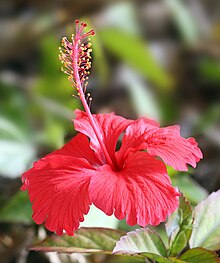
Hibiscus
Hibiscus
Hibiscus is a genus of flowering plants in the mallow family, Malvaceae. It is quite large, containing several hundred species that are native to warm-temperate, subtropical and tropical regions throughout the world. Member species are often noted for their showy flowers and are commonly known simply as hibiscus, or less widely known as rose mallow. The genus includes both annual and perennial herbaceous plants, as well as woody shrubs and small trees. The generic name is derived from the Greek word (hibískos), which was the name Pedanius Dioscorides (ca. 40–90) gave to Althaea officinalis.
Kingdom: Plantae
Division: Angiosperms
Class: Eudicots
Order: Malvales
Family: Malvaceae
Subfamily: Malvoideae
Tribe: Hibisceae
Genus: Hibiscus
General nature of leaves
Typically leaves are flat and thin, thereby maximising the surface area directly exposed to light and promoting photosynthetic function. Externally they commonly are arranged on the plant in such ways as to expose their surfaces to light as efficiently as possible without shading each other, but there are many exceptions and complications; for instance plants adapted to windy conditions may have pendent leaves, such as in many willows and Eucalyptus.
Likewise, the internal organisation of most kinds of leaves has evolved to maximise exposure of the photosynthetic organelles, the chloroplasts, to light and to increase the absorption of carbon dioxide. Most leaves have stomata, which open or narrow to regulate the exchange of carbon dioxide, oxygen, and water vapour with the atmosphere.
In contrast however, some leaf forms are adapted to modulate the amount of light they absorb to avoid or mitigate excessive heat, ultraviolet damage, or desiccation, or to sacrifice light-absorption efficiency in favour of protection from herbivorous enemies. Among these forms the leaves of many xerophytes are conspicuous. For such plants their major constraint is not light flux or intensity, but heat, cold, drought, wind, herbivory, and various other hazards. Typical examples among such strategies are so-called window plants such as Fenestraria species, some Haworthia species such as Haworthia tesselata and Haworthia truncata and Bulbine mesembryanthemoides.
The shape and structure of leaves vary considerably from species to species of plant, depending largely on their adaptation to climate and available light, but also to other factors such as grazing animals, available nutrients, and ecological competition from other plants. Considerable changes in leaf type occur within species too, for example as a plant matures; as a case in point Eucalyptus species commonly have isobilateral, pendent leaves when mature and dominating their neighbours; however, such trees tend to have erect or horizontal dorsiventral leaves as seedlings, when their growth is limited by the available light. Other factors include the need to balance water loss at high temperature and low humidity against the need to absorb atmospheric carbon dioxide. In most plants leaves also are the primary organs responsible for transpiration and guttation (beads of fluid forming at leaf margins).
Leaves can also store food and water, and are modified accordingly to meet these functions, for example in the leaves of succulent plants and in bulb scales. The concentration of photosynthetic structures in leaves requires that they be richer in protein, minerals, and sugars, than say, woody stem tissues. Accordingly leaves are prominent in the diet of many animals. This is true for humans, for whom leaf vegetables commonly are food staples.
A leaf shed in autumn.
Correspondingly, leaves represent heavy investment on the part of the plants bearing them, and their retention or disposition are the subject of elaborate strategies for dealing with pest pressures, seasonal conditions, and protective measures such as the growth of thorns and the production of phytoliths, lignins, tannins and poisons.
Deciduous plants in frigid or cold temperate regions typically shed their leaves in autumn, whereas in areas with a severe dry season, some plants may shed their leaves until the dry season ends. In either case the shed leaves may be expected to contribute their retained nutrients to the soil where they fall.
In contrast, many other non-seasonal plants, such as palms and conifers, retain their leaves for long periods; Welwitschia retains its two main leaves throughout a lifetime that may exceed a thousand years.
Not all plants have true leaves. Bryophytes (e.g., mosses and liverworts) are non-vascular plants, and, although they produce flattened, leaf-like structures that are rich in chlorophyll, these organs differ morphologically from the leaves of vascular plants; For one thing, they lack vascular tissue. Vascularised leaves first evolved following the Devonian period, when carbon dioxide concentration in the atmosphere dropped significantly. This occurred independently in two separate lineages of vascular plants: the microphylls of lycophytes and the euphylls ("true leaves") of ferns, gymnosperms, and angiosperms. Euphylls are also referred to as macrophylls or megaphylls ("large leaves").
Uses of Lotus Flowers
Uses
The distinctive dried seed heads, which resemble the spouts of watering cans, are widely sold throughout the world for decorative purposes and for dried flower arranging.
The flowers, seeds, young leaves, and "roots" (rhizomes) are all edible. In Asia, the petals are sometimes used for garnish, while the large leaves are used as a wrap for food, not frequently eaten (for example, as a wrapper for zongzi). In Korea, the leaves and petals are used as a tisane. Yeonkkotcha is made with dried petals of white lotus and yeonipcha is made with the leaves. Young lotus stems are used as a salad ingredient in Vietnamese cuisine. The rhizome (called ǒu (藕) in pinyin Chinese, ngau in Cantonese, kamal kakri in Hindi, renkon (in Japanese), yeongeun (연근 in Korean) is used as a vegetable in soups, deep-fried, stir-fried, and braised dishes and the roots are also used in traditional Asian herbal medicine. Petals, leaves, and rhizome can also all be eaten raw, but there is a risk of parasite transmission (e.g., Fasciolopsis buski): it is therefore recommended that they be cooked before eating.
Lotus rootlets are often pickled with rice vinegar, sugar, chili and/or garlic. It has a crunchy texture with sweet-tangy flavours. In Asian cuisine, it is popular with salad, prawns, sesame oil and/or coriander leaves. Lotus roots have been found to be rich in dietary fiber, vitamin C, potassium, thiamin, riboflavin, vitamin B6, phosphorus, copper, and manganese, while very low in saturated fat.[citation needed]
The stamens can be dried and made into a fragrant herbal tea called liánhuā cha in Chinese, or (particularly in Vietnam) used to impart a scent to tea leaves. This Vietnamese lotus tea is called trà sen, chè sen, or chè ướp sen. The lotus seeds or nuts (called liánzĭ,or xiān liánzĭ, in Chinese) are quite versatile, and can be eaten raw or dried and popped like popcorn, phool makhana. They can also be boiled until soft and made into a paste, or boiled with dried longans and rock sugar to make a tong sui (sweet soup). Combined with sugar, lotus seed paste becomes one of the most common ingredients used in pastries such as mooncakes, daifuku, and rice flour pudding.
In Vietnam, the bitter tasting germs of the lotus seeds are also made into a tisane (trà tim sen).
A unique fabric from the lotus plant fibers is produced only at Inle lake, Union of Myanmar and is used for weaving special robes for Buddha images called kya thingahn (lotus robe).
Lotus root, cooked, no salt
Nutritional value per 100 g (3.5 oz)
Energy 278 kJ (66 kcal)
Carbohydrates 16.02 g
Sugars 0.5 g
Dietary fiber 3.1 g
Fat 0.07 g
Protein 1.58 g
Water 81.42 g
Thiamine (vit. B1) 0.127 mg (11%)
Riboflavin (vit. B2) 0.01 mg (1%)
Niacin (vit. B3) 0.3 mg (2%)
Pantothenic acid (B5) 0.302 mg (6%)
Vitamin B6 0.218 mg (17%)
Folate (vit. B9) 8 μg (2%)
Choline 25.4 mg (5%)
Vitamin C 27.4 mg (33%)
Calcium 26 mg (3%)
Iron 0.9 mg (7%)
Magnesium 22 mg (6%)
Manganese 0.22 mg (10%)
Phosphorus 78 mg (11%)
Potassium 363 mg (8%)
Sodium 45 mg (3%)
Zinc 0.33 mg (3%)
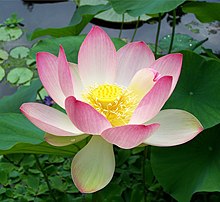
Nelumbo nucifera (Lotus)
Nelumbo nucifera
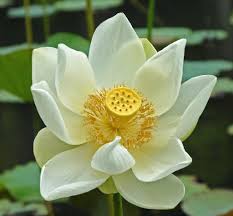
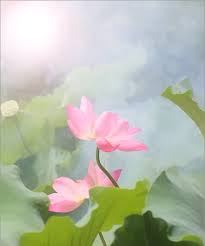
Nelumbo nucifera, known by a number of names including Indian lotus, sacred lotus, bean of India, or simply lotus, is one of two species of aquatic plant in the family Nelumbonaceae. The Linnaean binomial Nelumbo nucifera (Gaertn.) is the currently recognized name for this species, which has been classified under the former names, Nelumbium speciosum (Willd.) and Nymphaea nelumbo, among others. Names other than Nelumbo nucifera (Gaertn.) are obsolete synonyms and should not be used in current works. This plant is an aquatic perennial. Under favorable circumstances its seeds may remain viable for many years, with the oldest recorded lotus germination being from that of seeds 1,300 years old recovered from a dry lakebed in northeastern China.
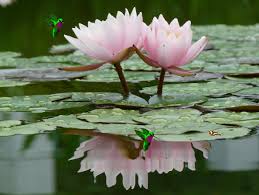
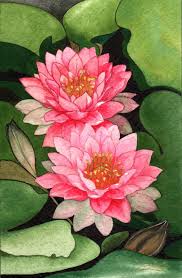
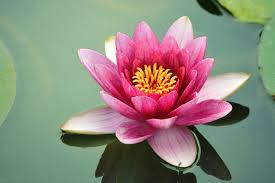
A common misconception is referring to the lotus as a water lily (Nymphaea), an entirely different plant, as can be seen in the center of the flowers, which lack the structure that goes on to form the distinctive circular seed pod in the Nelumbo nucifera.[citation needed]
Native to Tropical Asian nations and Queensland, Australia,it is commonly cultivated in water gardens. It is also the national flower of India and Vietnam.
A common misconception is referring to the lotus as a water lily (Nymphaea), an entirely different plant, as can be seen in the center of the flowers, which lack the structure that goes on to form the distinctive circular seed pod in the Nelumbo nucifera.[citation needed]
Native to Tropical Asian nations and Queensland, Australia,it is commonly cultivated in water gardens. It is also the national flower of India and Vietnam.
(unranked): Angiosperms
(unranked): Eudicots
Order: Proteales
Family: Nelumbonaceae
Genus: Nelumbo
Species: N. nucifera
Botany
The roots of Nelumbo nucifera are planted in the soil of the pond or river bottom, while the leaves float on top of the water surface or are held well above it. The flowers are usually found on thick stems rising several centimeters above the leaves. The plant normally grows up to a height of about 150 cm and a horizontal spread of up to 3 meters, but some unverified reports place the height as high as over 5 meters. The leaves may be as large as 60 cm in diameter, while the showy flowers can be up to 20 cm in diameter.
Researchers report that the lotus has the remarkable ability to regulate the temperature of its flowers to within a narrow range just as humans and other warmblooded animals do. Dr. Roger S. Seymour and Dr. Paul Schultze-Motel, physiologists at the University of Adelaide in Australia, found that lotus flowers blooming in the Adelaide Botanic Gardens maintained a temperature of 30–35 °C (86–95 °F), even when the air temperature dropped to 10 °C (50 °F). They suspect the flowers may be doing this to attract coldblooded insect pollinators. The study, published in the journal Nature, is the latest discovery in the esoteric field of thermoregulation, heat-producing, plants. Two other species known to be able to regulate their temperature include Symplocarpus foetidus and Philodendron selloum.
As mentioned earlier, the traditional Sacred Lotus is only distantly related to Nymphaea caerulea, but possesses similar chemistry. Both Nymphaea caerulea and Nelumbo nucifera contain the alkaloids nuciferine and aporphine.
Subscribe to:
Posts (Atom)